

Why Ziploc Freezer Bags Failed Us
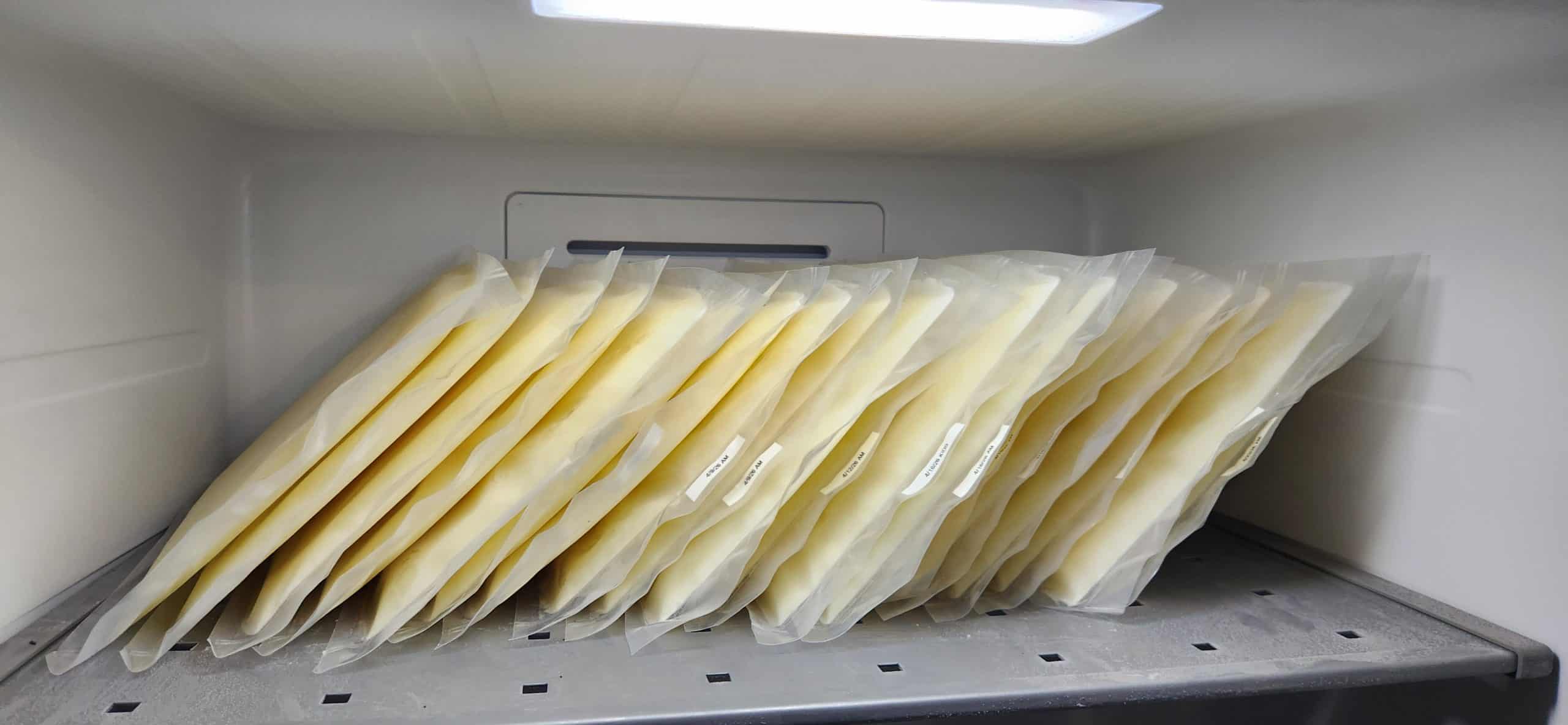
We’ve all been there. You spend all that time filtering and prepping, only to pour your hard work into a gallon Ziploc freezer bag. Because they aren’t designed for heavy liquids, they freeze in these awkward, bottom-heavy “blobs” that take up way too much shelf space.
The real heartbreak happens during the thaw. I can’t tell you how many times I’ve pulled a gallon bag out, put it in the sink, and come back to find that a seam leaked. Not only is that liquid gold wasted, but now you have a sticky mess to clean up on top of 100 other things on your To Do list.
Worst of all? Because those bags freeze in such a thick, solid lump, they take forever to thaw. Even if you don’t forget to pull one out the night before, you’re still stuck waiting hours for the center of that “ice cube” to finally melt.
A Farmer-to-Farmer Secret
The turning point happened when I visited another dairy goat farmer to pick up a new doe for our herd. As most goat owners know, these visits usually turn into long chats where I end up asking a million questions.
I’m always curious about how other people manage their rhythms!
During our talk, she mentioned something that caught my ear: she only had one goat milk customer.
Since she had a full on dairy, I couldn’t help but ask how that worked. She explained that her customer was a goat milk soap business, so she froze all of her milk in sleeves to make it easier to store and transport. Naturally, I just had to see them.
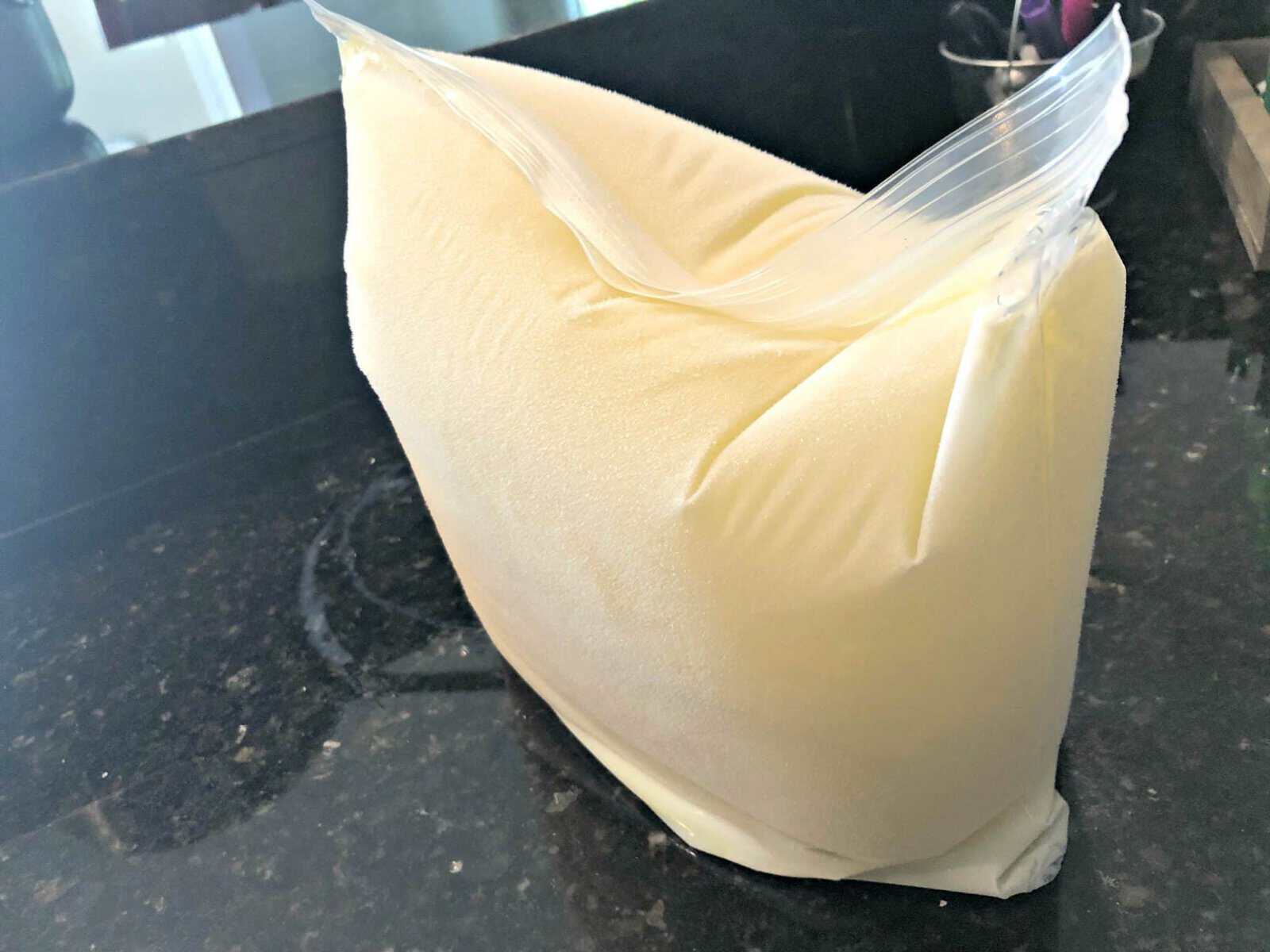
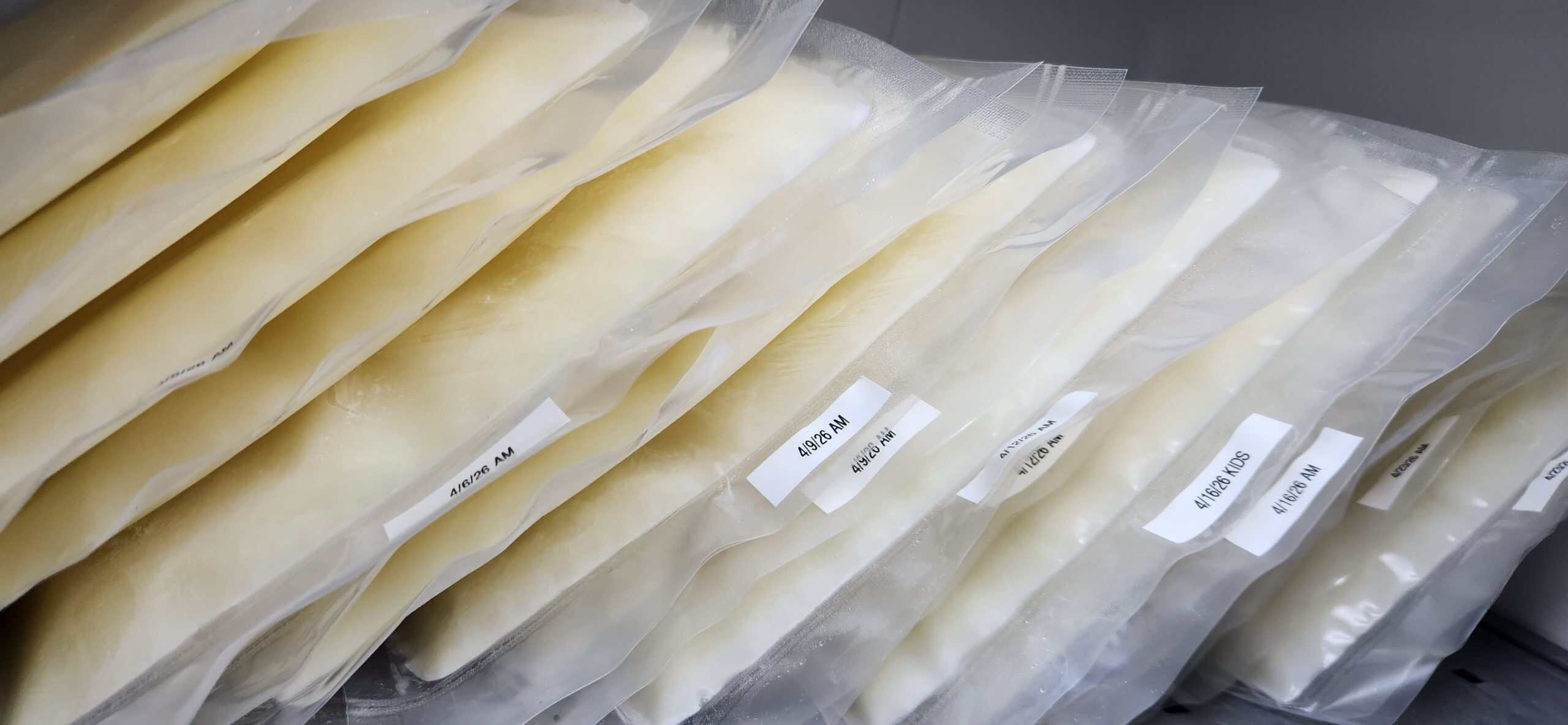
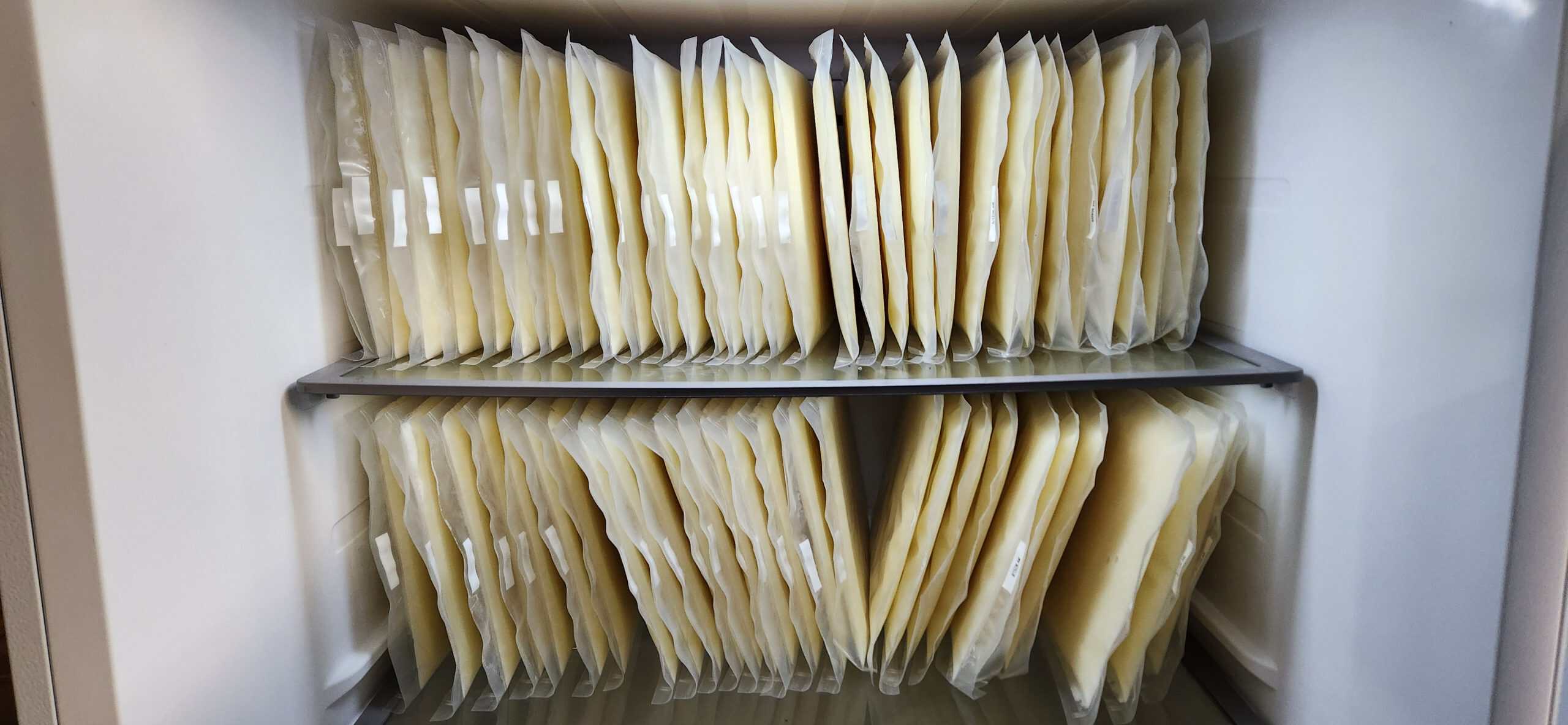
When she opened her freezer, I didn’t see the usual mountain of frozen bags or “blobs” taking up space. Instead, I saw these professional, uniform sleeves stacked perfectly in a row like frozen milk books on a cold shelf.
Seeing it in person was the “aha!” moment I needed. I realized that while a professional setup like this may be a bit of an investment, the cost of wasted milk, constant cleanup, and freezer chaos was already costing me more in the long run. I went home knowing that if I wanted our milk room to run like a professional operation, I needed to upgrade from grocery store bags to a real system.
The Avid Armor Chamber Sealer
We didn’t want to guess, so we asked her for her exact recommendation. She told us without hesitation: an Avid Armor Chamber Sealer.
When we started researching, our main priority was finding a machine that could handle the largest bag size possible. We wanted efficiency, and the USVX was the clear winner because it accommodates the 10 x 13 sleeves.
It is important to understand that it has to be a chamber sealer. A standard vacuum sealer (the kind you find at most big-box stores) will not work for liquids properly. Those machines work by sucking air out of the bag, which inevitably sucks the milk right along with it. This creates a mess and almost always ruins the seal.
A chamber sealer, however, removes the air from the entire chamber at once. The pressure stays equalized, so the milk stays perfectly still while the air is evacuated. It is the only real way to freeze raw goat milk with zero mess and a 100% reliable seal.
How to Freeze Goat Milk without the Mess
The goal is a professional, airtight seal every single time. To get that, the seal area of the bag must stay bone-dry.
Here is the exact process we use at Shalom Farms to move our strained milk to the freezer without a single drop out of place.
Step 1: Prep
To avoid the “collapsing bag” nightmare, I place a 10 x 13 sleeve inside a tall canister.
Instead of folding the bag, I simply secure the edges to the rim using a few plastic clothespins, two on the front side facing me and one on the back.
This creates a stable, wide-open target so the milk goes straight to the bottom without touching the top edges of the bag, keeping your seal area bone-dry.
Step 2: Portioning
We measure exactly one quart into each sleeve with a simple glass measuring cup.
This gives you four sleeves per gallon, which is the perfect size for daily use or for customers.
Because the 10 x 13 bag is generous, there is plenty of headspace left.
Step 3: Seal
Once the bag is filled, I unclip it and place it flat inside the USVX. Before closing the lid, I gently smooth the bag with my hands to push out as many air bubbles as possible. This keeps the sleeves looking sleek and prevents air pockets from forming.
The beauty of this machine is how efficient it is. You simply lay the opening of the sleeve over the seal bar and close the lid.
The key here is to gently press down on the lid for the first few seconds of the cycle. This helps the gasket catch the vacuum; once you feel the lid lock down under the pressure, you can let go and let the chamber finish the work.
In about 30 seconds, the air is gone, and you have a perfectly flat, professional-grade seal.
Once the seal is complete, the final touch is the label.
I use a label maker to tag each brick with the date. It only takes a second, but it is the key to maintaining a “First In, First Out” system in the freezer so you are always using your oldest milk first and keeping the inventory fresh.
Step 4: Freeze
This is the secret to the “Milk Library” look.
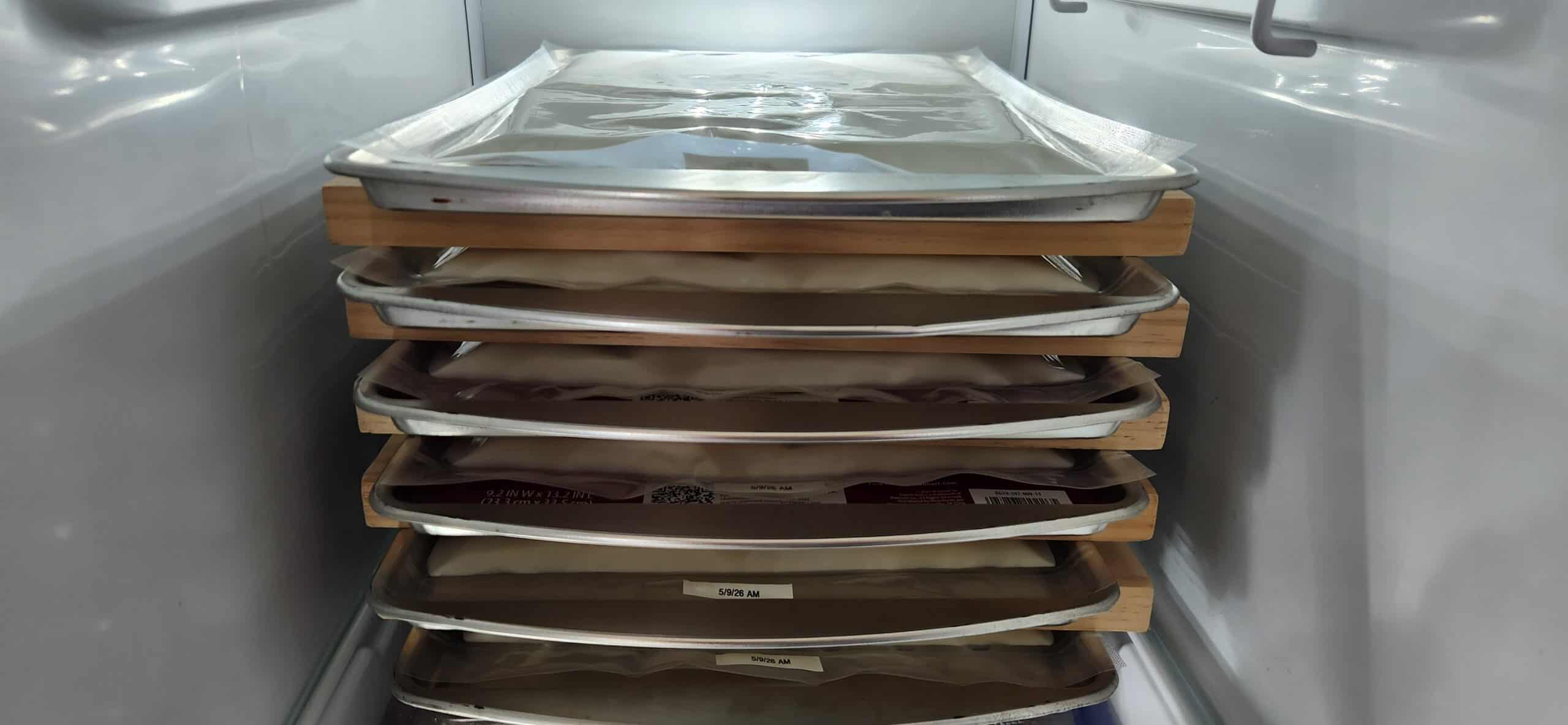
I lay the sealed sleeves out on cheap grill pans or cookie sheets.
Jeff even cut up a scrap piece of 1x2x6 wood to make little buffer pieces for me; placing these between the pans allows them to stack better while still letting the air circulate.
It is vital to freeze the sleeves perfectly flat overnight. If you just toss them into the freezer, they’ll slump and freeze into odd shapes, but on the pans, they turn into thin, uniform “bricks” that are a dream to organize.
Step 5: Stack
Once they are frozen solid, I move them to our downstairs milk freezer. Because they are flat and uniform, you can stand them up vertically. It transforms your freezer into a neat, organized “library” where you can see exactly how much inventory you have at a glance.
Frequently Asked Questions
When people ask “can you freeze goat milk?” or “how can you freeze milk?” the answer is a resounding yes, but there are a few things to keep in mind regarding quality and safety.
Does freezing kill the beneficial bacteria?
One of the main reasons people choose raw goat milk is for the probiotics and enzymes.
While freezing puts these “to sleep” and may slightly reduce some counts over many months, the vast majority of the nutritional profile and beneficial bacteria remain intact once thawed.
It is still a far superior option to grocery store pasteurized milk.
Can I freeze milk in glass jars instead?
You can, but it is risky.
Glass doesn’t “give” when the liquid expands as it freezes, which often leads to cracked jars and wasted milk.
If you do use glass, you have to leave a massive amount of headspace and leave the lids loose until the milk is completely frozen.
The “Milk Library” sleeves are much safer, save significantly more space, and eliminate the risk of ever having to deal with glass shards.
Is it okay to refreeze milk once it has thawed?
We don’t recommend it.
Once raw goat milk has been thawed, the clock starts ticking on its freshness.
Refreezing can also break down the cellular structure of the milk even further, which negatively affects the taste and consistency.
It’s better to freeze in smaller quart-sized portions so you only thaw exactly what you need.
We’ve found that quarts are the perfect size; you can always thaw out more than one at a time.
Does the texture change?
When you freeze milk, you might notice it looks a bit yellow while frozen. This is normal!
Once it thaws and you give it a quick shake, the color and texture return to that creamy white you expect from fresh raw goat milk.
How long can you freeze milk?
While you technically can freeze milk for up to a year or more, we recommend using your frozen milk within 6 months for the best flavor.
Raw goat milk is resilient, but over time, the cream can start to separate or take on “freezer” smells if not sealed in an airtight chamber pouch.
Can you freeze goat milk for pets?
Absolutely. Many people specifically look for goat milk for dogs because it is incredibly easy on their digestion and packed with probiotics.
Our “Milk Library” bricks are perfect for pet owners because you can thaw just one quart at a time to use as a meal topper.
One of our out of town milk lovers gets 1 gallon frozen each week for her pups and we hold them so that she can have one monthly pickup.
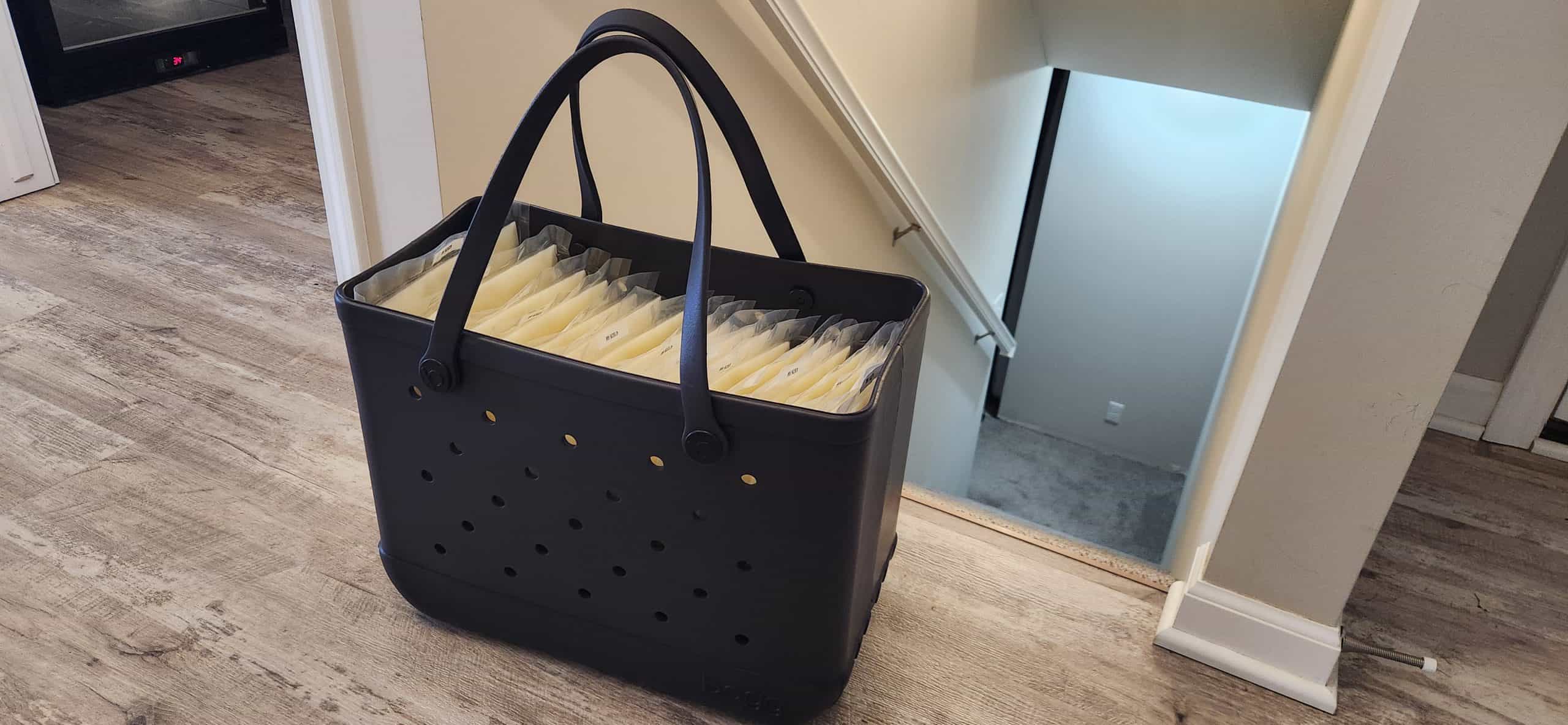
Tip: A large bogg bag works PERFECT for hauling up a ton a frozen milk sleeves from downstairs. It also perfectly fits 2 dozen eggs side by side – so if you’re looking for a sturdy and strong farm bag (in just about every color!) check out the Bogg bag.
Fast Thawing and Easy Serving
One of my most favorite things about this system is how it handles the thaw.
Because these sleeves are thin and flat, they have a high surface area.
Unlike those old gallon “ice blobs” that took days to melt, these thin bricks thaw remarkably fast in a sink of slightly warm water.
Or if you like to plan ahead, it is as easy as pulling a sleeve from the freezer and throwing it on a grill pan or cookie sheet in the fridge to thaw overnight. By morning, it’s ready to go!
When you are ready to use the milk after it has thawed, the process is simple:
- Snip a small corner off the top of the sleeve.
- Pour it directly into a glass mason jar if you’ve got excellent hand/eye coordination
- but if you’re like me, pour it into a small saucepan that has nifty pouring spouts for a cleaner option
- Dispose of the sleeve and enjoy your fresh-tasting milk.
What You’ll Need to Get Started
If you are ready to retire the Ziploc blobs and upgrade your farm’s efficiency, these are the exact tools we use every single day of milking season at Shalom Farms.
- Avid Armor Ultra Series USVX Chamber Vacuum Sealer: This is the machine that changed everything for us. It handles liquids perfectly and fits the large bags we need for gallon-scale processing. We ONLY use this chamber sealer for milk, but it’s up to you. if you’d like to make it dual purpose.
- 10 x 13 Chamber Vacuum Pouches: These are the heavy-duty, BPA-free sleeves that create that “Milk Library” look. The 10 x 13 size is the secret to getting a flat, quart-sized freeze with plenty of room for a perfect seal. We got started with the 250 count pack, but after realizing this was the way to do, it’s MUCH cheaper if you buy in bulk.
- Clothespins & A Tall Canister: This is what I use, but any tall, narrow canister and a couple designated clothespins are all you need to execute the “no-mess” filling trick. Be sure to toss those plastic clothespins in when you’re washing/sanitizing your jars to keep them clean as well!
- Grill Pans or old Cookie Sheets: The final piece of the puzzle. Using a flat tray ensures your sleeves don’t slump or freeze in odd shapes. I like the grill pans because they aren’t as heavy but still sturdy enough to hold the weight.
A Better Way
Ultimately, making this switch was about more than just a cleaner freezer. It was about creating a system that works as hard as we do during milking season.
When the milk is organized and the workflow is simple, it leaves more time for the parts of farming we actually love.
Hopefully, this “Milk Library” system helps you save a few gallons of your own liquid gold this year.
Are You Interested in Trying out some Frozen Milk Sleeves?
If you’re in or around Lincoln, Nebraska and want to try some frozen goat milk, let us know!
0 Comments
Trackbacks/Pingbacks